Sound familiar?Box Grove
- The call
- After a cold night the door stays open until the garage warms up. There is frost on the sensor lenses and a ridge of salty slush piled against the brackets where the snow blower was parked.
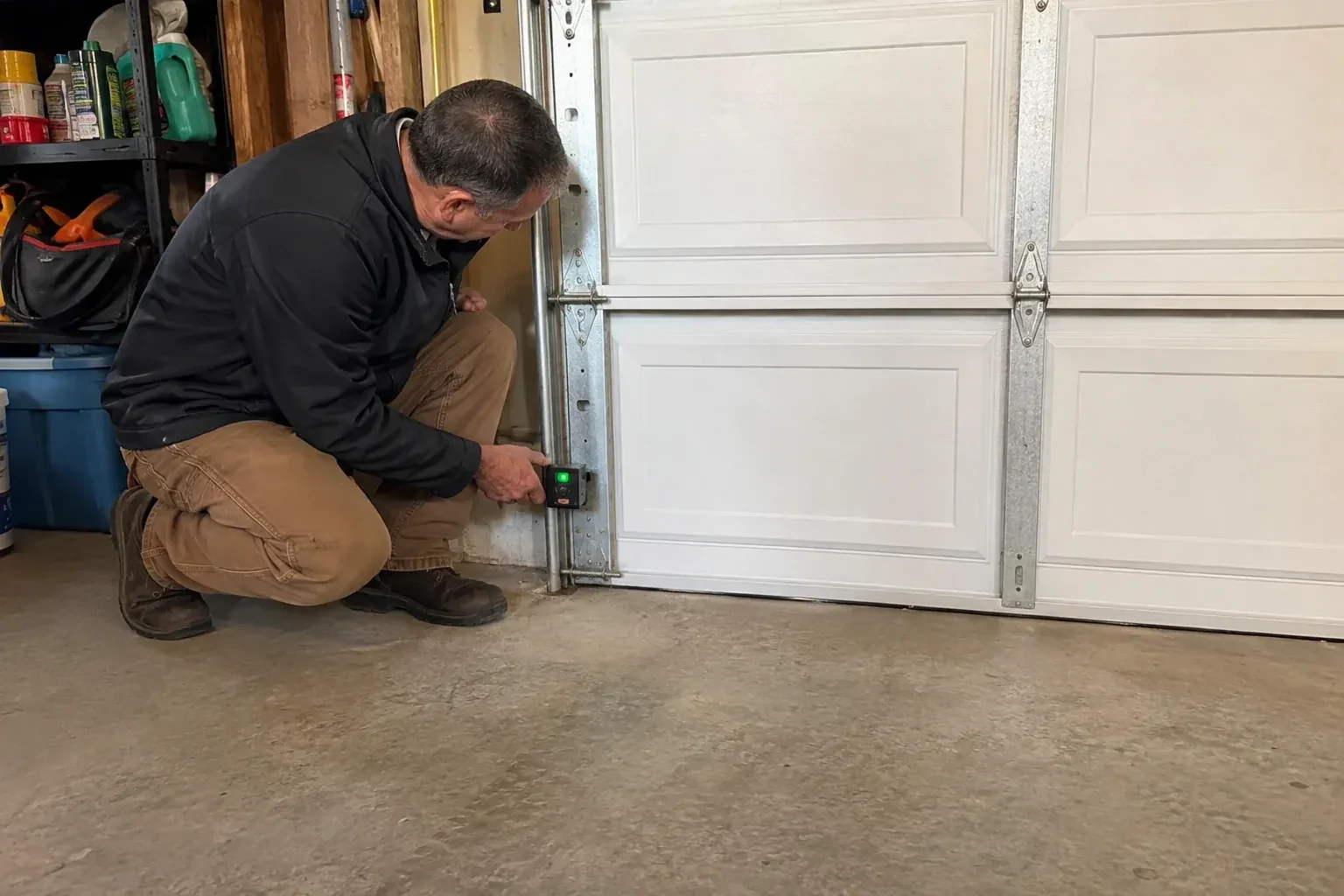
The sensors are only as good as the thin two-conductor wire that links them to the opener. It runs from the low-voltage terminals on the head unit along the ceiling and down each wall to the floor, stapled as it goes, and it is easily pierced, cut during renovations, chewed, or pulled loose at the terminals. When both sensor lights are dark, or the opener's code says the circuit is open or reversed, the technician tests the run end to end, repairs the damaged section or replaces the whole run, checks polarity at the terminals, and clips the new wire clear of the track.
Sound familiar?Box Grove
Photo-Eye Sensor Alignment or Replacement · Box Grove
Scene 1
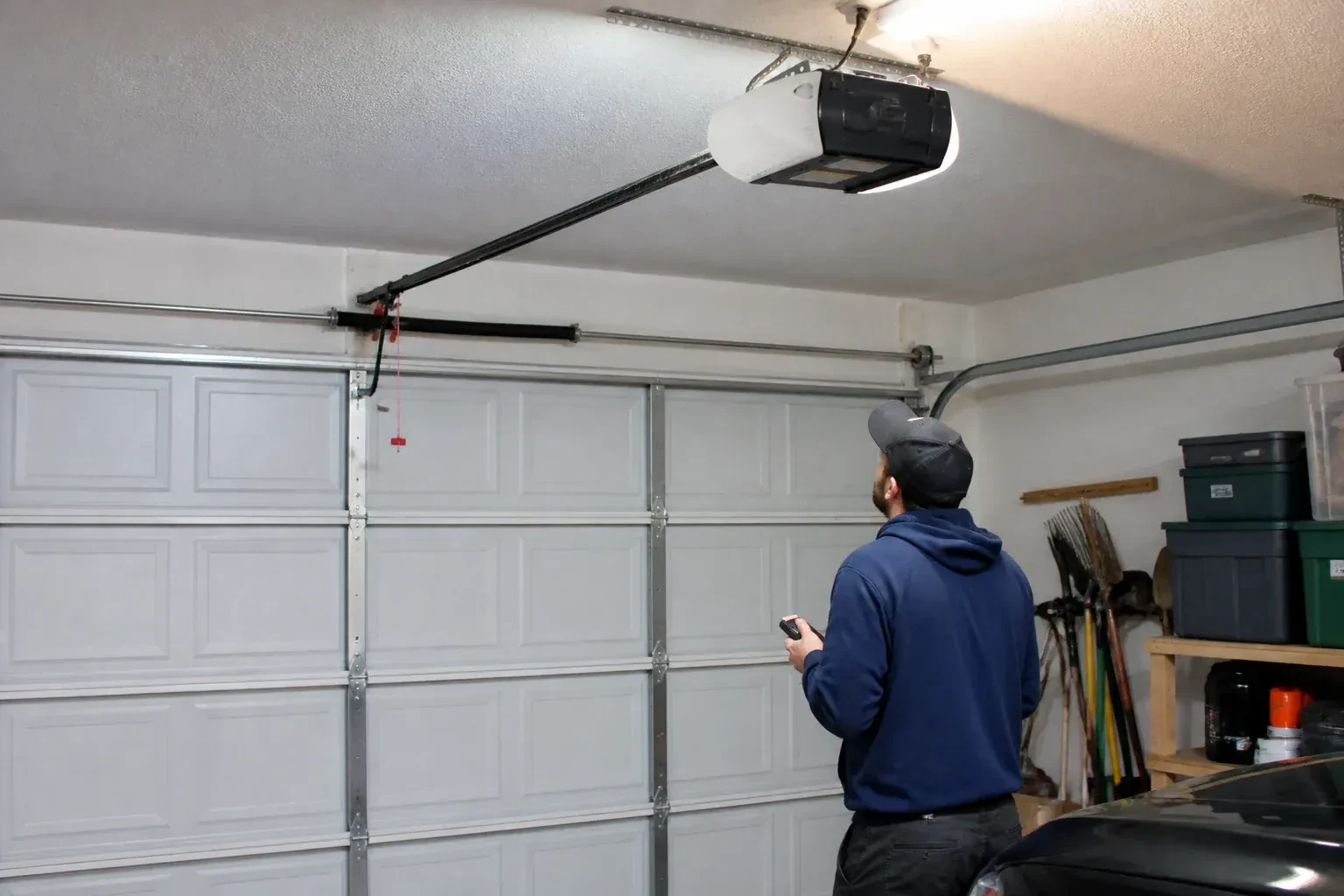
The first minutes are spent listening. What does the door do when close is pressed: drop and bounce, stay put, or close only while the wall button is held? Does the opener light blink, and how many times? When did it start, and what changed around then: a car bumped the track, a storm, shelving went up, the garage was reorganised, the first frost arrived? Does it happen at all hours or only on bright mornings? Those answers usually point at one of a handful of causes before a single tool comes out, and they decide whether the technician heads for the brackets, the wire or the head unit first.
Scene 2
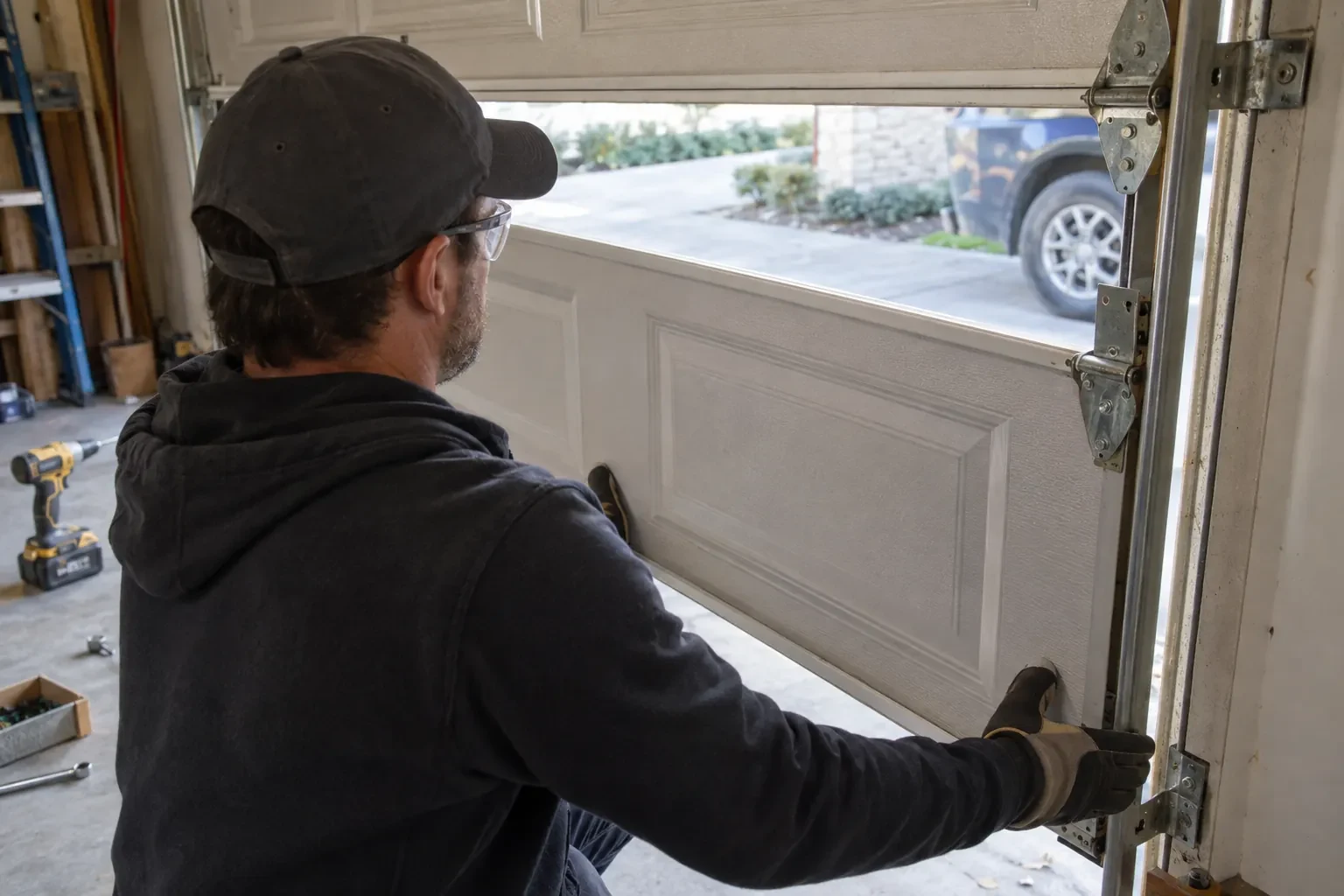
No sensor job is finished on a steady light alone. The door is closed from the wall control and from a remote, and while it is on its way down an object is passed through the beam; the door must stop and return to fully open. Then a 2x4 is laid flat on the floor under the centre of the door and the door is closed onto it; it must reverse on contact. Both are repeated, the opener's diagnostic light is confirmed clear, and any app or hub reporting a sensor code is refreshed. The customer watches the tests so the normal behaviour is seen, not described.
Scene 3
The habit worth keeping takes about a minute. Once a month, with the door open, press close on the wall control and, as it moves down, pass a broom handle through the beam near the floor. The door should stop and climb back to fully open. Then lay a 2x4 flat under the middle of the door and close onto it; the door should touch it and reverse. If either test fails, stop using the opener; close the door first if it is not already closed, then use the manual release, and get help moving it by hand if it feels heavy or will not hold. A door that passes both tests is doing its job.
What shapes the quoteMount Joy Door & Opener Co.
FeesSame any hour
Start the door closing and, while it is moving, swing a broom handle through the beam low across the opening; the door should halt and travel back up. Next, put a 2x4 flat beneath the door's centre and run the door onto it; it should back off as soon as it touches. If either test fails, close the door first if you can, use it by hand with the manual release, and book a visit; do not release it if it feels heavy.
They do, slowly. The infrared emitter and the receiver dim over many years, lenses craze or cloud from sun and salt, housings crack, and water finds its way in at floor level. A pair that needs re-aligning more and more often, or whose light drifts between steady and flickering with nothing touched, is usually ageing. Because pairs are matched to the opener, an older opener is worth identifying early so the right replacement is on hand.
Low. The industry checklist expects the beam no more than roughly 15 cm (6 in) up from the floor, so that a small child, a pet or a bicycle wheel breaks it. Both sensors are set at the same measured height and level with each other, since a difference of a couple of centimetres is enough to lose the beam. Within that rule the technician can raise them a little to keep them out of the strip where slush collects.
YorkOntario
Photo-Eye Sensor Alignment or Replacement · Markham, Mount Joy, Cedar Grove, Locust Hill
Every square is one home in a hundred.
On-site assessment
The small light on one of the sensors near the floor has gone dark, or it flickers when someone walks past the track.
(289) 301-7401, open 24/7.
On-site assessment preferred · (289) 301-7401, open 24/7